

Top AI Tools for Creating Scalable Voice Agents in Business Automation

Heading 1
Heading 2
Heading 3
Heading 4
Heading 5
Heading 6
Lorem ipsum dolor sit amet, consectetur adipiscing elit, sed do eiusmod tempor incididunt ut labore et dolore magna aliqua. Ut enim ad minim veniam, quis nostrud exercitation ullamco laboris nisi ut aliquip ex ea commodo consequat. Duis aute irure dolor in reprehenderit in voluptate velit esse cillum dolore eu fugiat nulla pariatur.
Block quote
Ordered list
- Item 1
- Item 2
- Item 3
Unordered list
- Item A
- Item B
- Item C
Bold text
Emphasis
Superscript
Subscript

Top AI Tools for Creating Scalable Voice Agents in Business Automation
.png)
Irov Vaul
Join us on November 6th as Mr. Yash Mishra, Product Manager, Fatakpay, reveals the precise strategies that eliminates the speed trap and guarantees a 30% conversion boost.
Imagine a customer calling your business late at night or during peak hours. Instead of waiting in a long queue, they reach a smart voice assistant that answers right away. This smooth flow creates a better experience for you and your customers.
Besides boosting the overall efficiency, it prevents lost opportunities, increases customer satisfaction, and frees your team for more important work.
Voice agents are now an essential part of automating sales, marketing, CRM, and RevOps systems. As expectations rise, you cannot afford slow replies or inconsistent service.
Voice automation powered by top AI tools delivers fast, accurate, and scalable responses every time. This gives your business a clear advantage in a crowded market.
What Are Voice Agents and Where Do They Fit in Automation?
Conversational voice assistants, also known as voice agents, have come a long way. The industry itself is exploding. A recent report indicates that the voice AI agent market is expected to be worth around $47.5 billion by 2034.
The system employs speech recognition and natural language understanding to hold conversations with people over phone calls or within applications. With such systems, you get more coverage, faster replies, and far fewer bottlenecks.
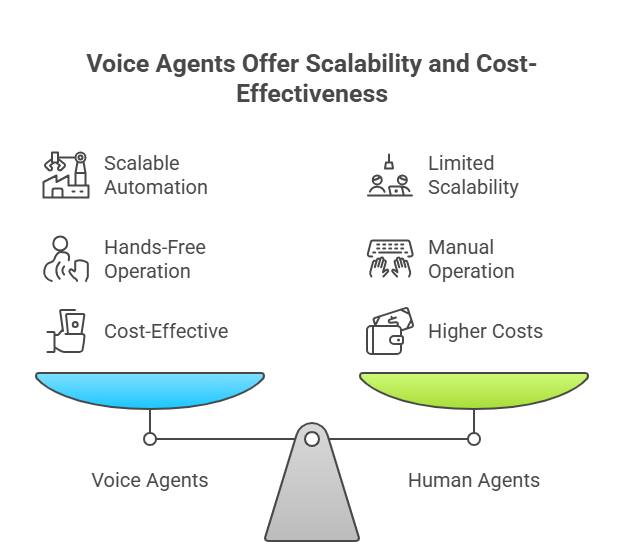
Here’s how voice agents fit in automation:
- Customer Service: A voice AI agent can attend common inquiries, guide someone through basic queries, or identify early when a call needs a human agent. This keeps the line flowing and smooths things out at both ends. This is also useful for support on Twitter and Facebook.
- Sales Intake: When a lead calls in, an agent is on the line instantly. It gathers the essentials, validates sales strategies, and then directs qualified leads to the appropriate salesperson.
- Appointment Management: These agents schedule, update, or cancel appointments in real-time. They also send reminders, which helps eliminate the no-shows. This means fewer surprises for your team and cleaner calendars in return.
- Internal Helpdesk: Employees can call in and get instant answers to HR, IT, or operations-related questions. This reduces ticket volume and frees up teams to solve actual problems.
Benefits of Using Voice Automation in Business Workflows
Voice automation speeds up responses, reduces waiting time, and improves customer satisfaction. It also lowers operational costs by reducing the need for extra staff.
Key benefits include:
- Faster service: Voice agents answer instantly and handle thousands of calls at once.
- Lower costs: No need to expand teams for peak hours.
- Better lead capture: Agents qualify leads and update your CRM automatically.
- Scalable support: They handle sudden call spikes without slowing down.
- Consistent service: Every customer gets accurate and reliable responses.
How to Evaluate AI Voice Agent Platforms
You can test AI voice agent platforms by seeing how well they operate at scale in real conversations. Begin with evaluating conversation: how well it understands intention, deals with interruptions, and how accurate it is in a variety of accents and speech patterns. This will indicate if the agent can handle natural, unscripted calls.
Before choosing the top AI tools to create scalable voice agents, evaluate the following criteria for the best results:
Criteria : Speech Accuracy
What It Means: Understands accents and natural speech.
Why It Matters: Fewer errors and smoother conversations.
Criteria: System Integration
What It Means: Connects to CRM and business tools.
Why It Matters: Consistent data and faster workflows.
Criteria: Scalability
What It Means: Handles high call volumes.
Why It Matters: Stable performance as you grow.
Criteria: Workflow Customization
What It Means: Builds flexible conversation paths.
Why It Matters: Better automation and easy escalations.
Criteria: Security & Compliance
What It Means: Protects customer data.
Why It Matters: Trust, safety, and regulatory alignment.
Top AI Tools for Building Scalable Voice Agents
Here are the seven best AI tools that you can use to build scalable voice agents:
1. Retell AI
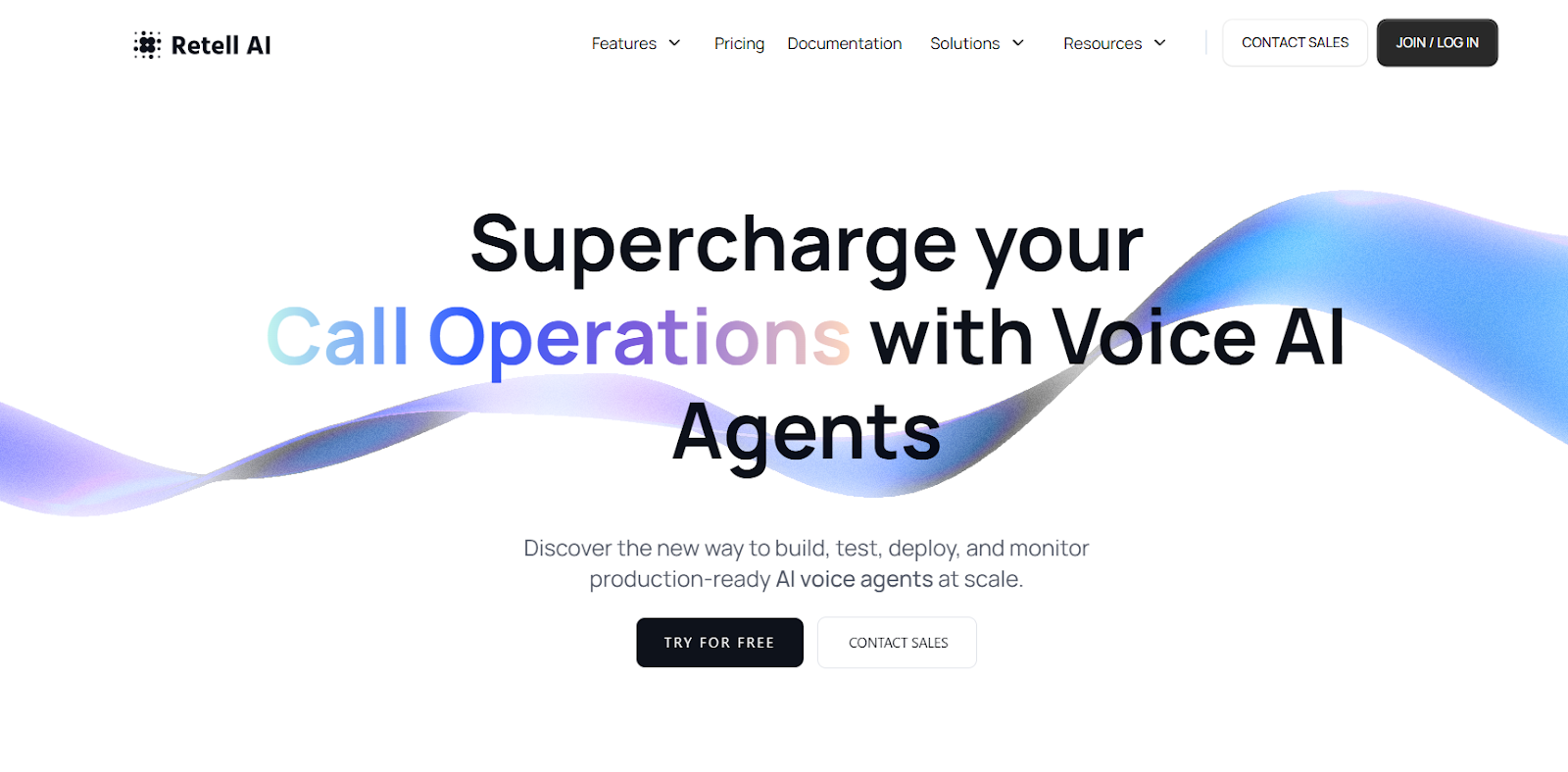
Retell AI builds real-time and human-like voice agents with fast deployment and transparent pricing. It focuses on low latency, flexible model control, and smooth phone interactions.
Benefits
Retell offers natural sub-second responses and strong multilingual voice options. Its drag-and-drop builder helps teams design and launch agents quickly. Real-time analytics provide teams with transparency around caller sentiment and performance.
Pros
- Very fast, natural voice calls
- Clear usage-based pricing
- No implementation partners needed
- Supports top LLMs and premium voices
- SOC 2, HIPAA, and GDPR compliant
Cons
- Requires basic prompt and LLM understanding
- High call volumes may increase spend
G2 Rating: 4.8/5 (783 reviews)
Review: “Retell AI has completely transformed the way we manage automated calls, with impressive voice quality and understanding.”
2. PolyAI
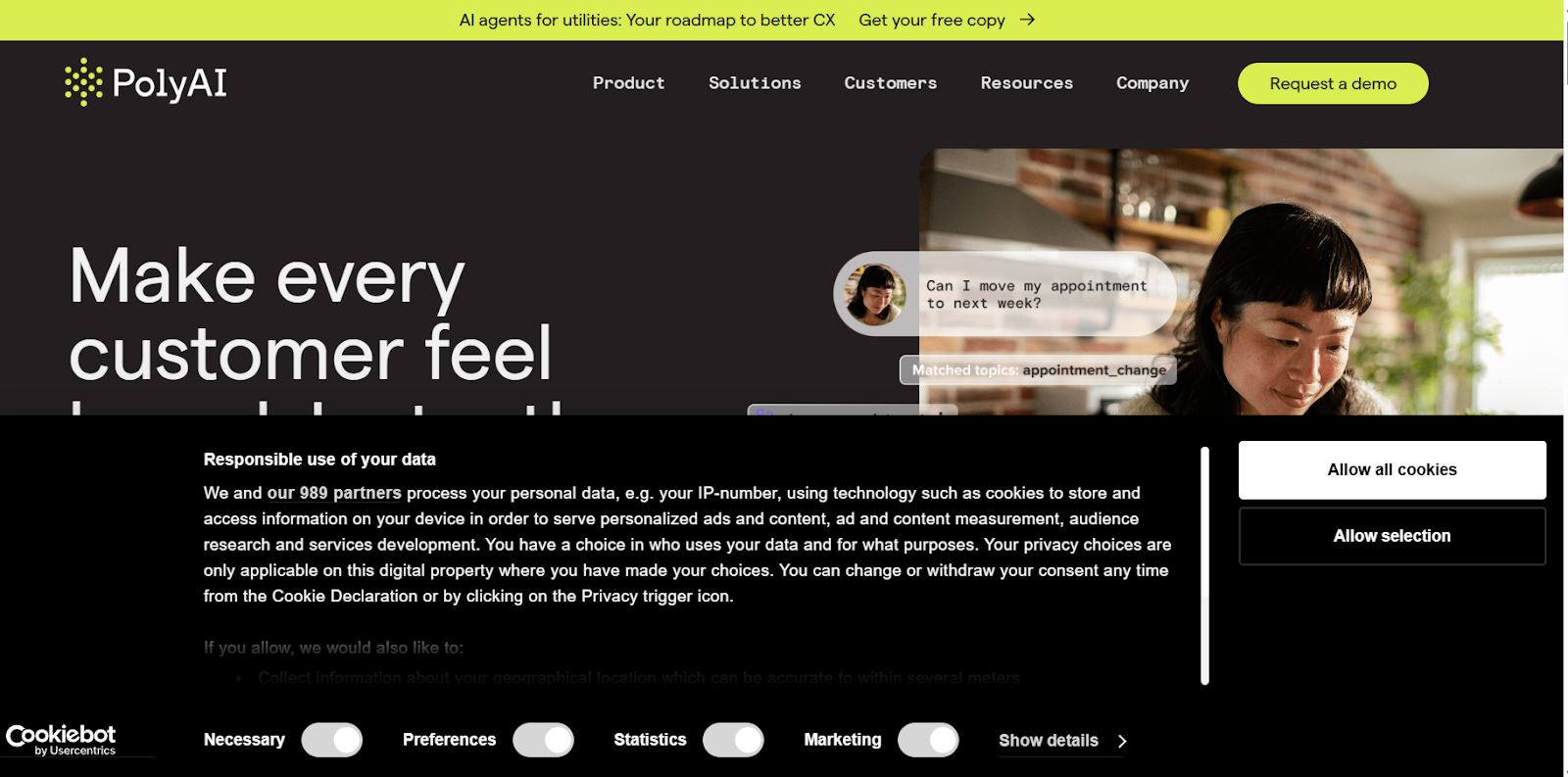
PolyAI builds enterprise-grade voice assistants for global customer support teams. It specializes in high call containment and strong multilingual accuracy.
Benefits
PolyAI provides pre-trained domain assistants, which reduces deployment time. It handles natural interruptions, mixed phrases, and free-flowing speech well. Global organizations benefit from its strong cross-accent understanding and compliance posture. It integrates well with CRM and contact center systems.
Pros
- More than 80% call containment in many deployments
- Strong multilingual support
- Enterprise-ready compliance and security
- Designed for complex & high-volume environments
Cons
- High contract minimums
- Less suitable for small teams or pilots
G2 Rating: 5/5 (12 reviews)
Review: “PolyAI impressed us by providing a product that could be launched in a short amount of time without risking quality.”
3. Bland AI
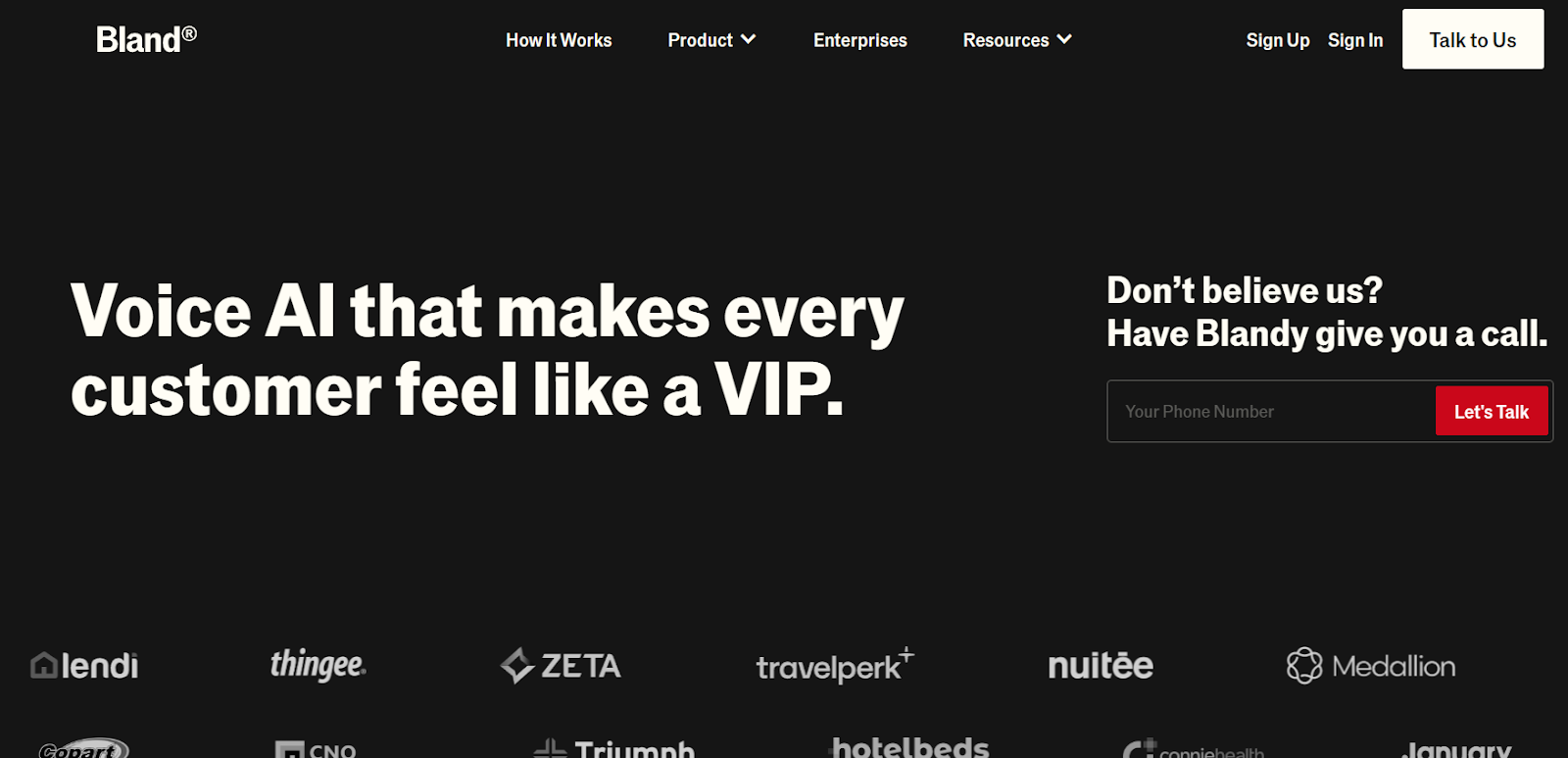
Bland AI delivers large-scale and secure voice automation built for enterprises that handle massive call volumes. It focuses on privacy, governance, and extremely high concurrency.
Benefits
Bland supports up to one million concurrent calls, which makes it ideal for organizations with heavy traffic. Its Conversational Pathways give teams tight control over what the agent can say by blending scripted and generative logic. The platform uses proprietary speech and reasoning models for stable performance and lower latency. It also supports voice, chat, and SMS from one system.
Pros
- Handles extremely high call volumes
- Strong data governance and privacy controls
- Custom voice and model infrastructure
- Omnichannel support in one platform
Cons
- Requires an engineering-heavy setup
- Overkill for smaller or simpler use cases
Product Hunt Rating: 3/5 (2 reviews)
Review: “Very low latency! I'm surprised!”
4. Voiceflow
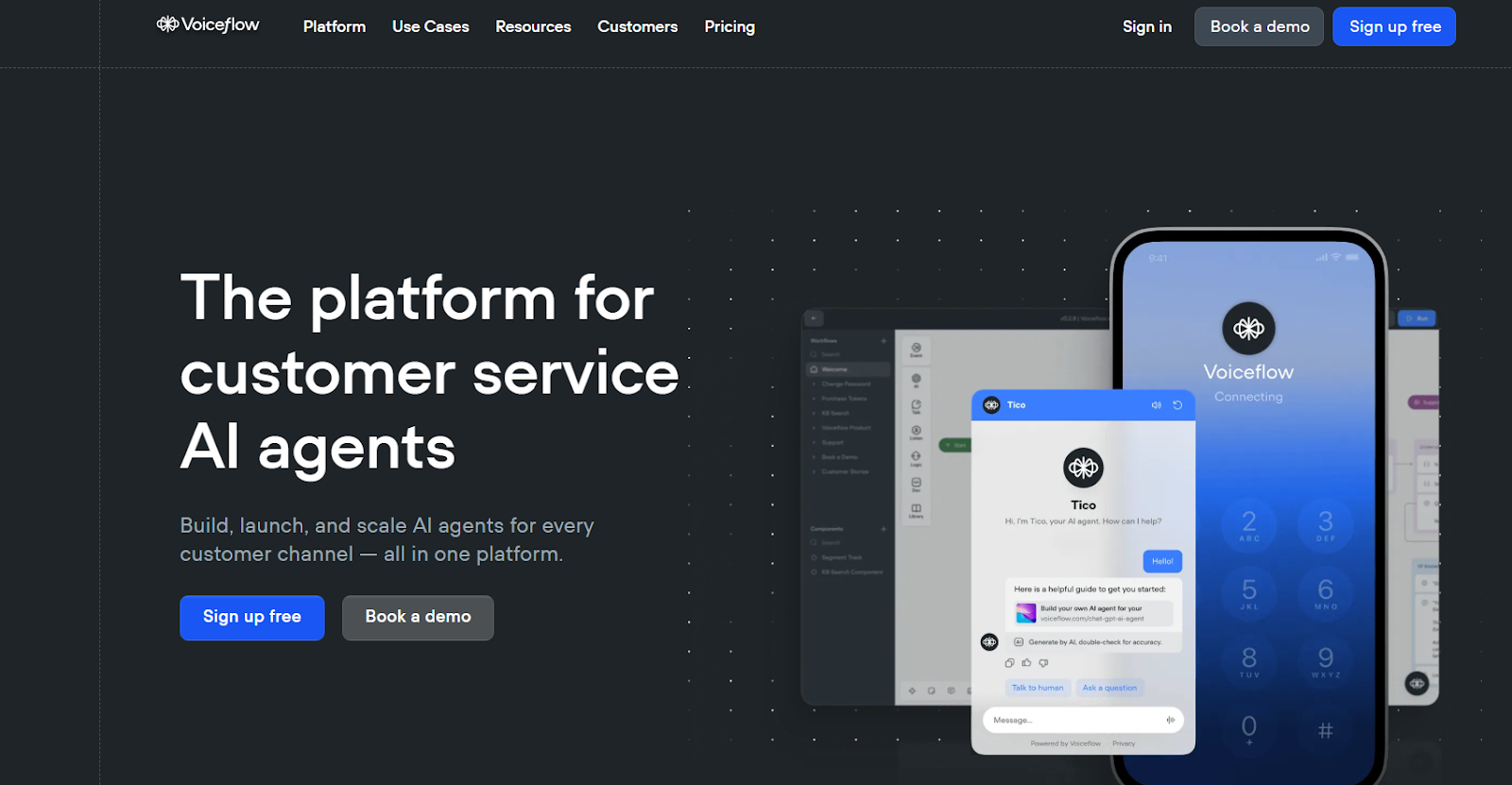
Voiceflow is a no-code platform for designing and orchestrating voice and chat agents. It is one of the top AI tools designed for speed, collaboration, and rapid experimentation.
Benefits
With its drag-and-drop builder, Voiceflow enables teams to build and test conversational flows in a few hours. Designers, product teams, and engineers can work in real-time using shared workspaces and comments. Voiceflow can work with any LLM, backend system, or API with the flexibility to avoid vendor lock-in. It handles both voice and chat in one workspace to maintain consistency between cross-channel behavior.
Pros
- Excellent for quick prototyping
- Strong collaboration features
- Flexible and LLM-agnostic
- Supports multi-channel agent design
Cons
- Not a built-in telephony platform
- Costs rise with larger teams
- Production systems still require external infrastructure
G2 Rating: 4.6/5 (108 reviews)
Review: “Good platform if you have less than 5000 chats per month, otherwise extremely expensive.”
5. Sierra AI
Sierra AI builds brand-aligned customer service agents that follow company policies closely and think and act based on them. It focuses on accuracy, reliability, and tight governance.
Benefits
Sierra agents connect with CRMs and backend systems to complete tasks, such as updates, returns, and billing changes. Its multi-model architecture reduces errors and maintains consistent reasoning. Voice support feels natural, handling interruptions and ensuring smooth conversation flow. Strong guardrails and auditing tools help teams control tone, compliance, and decision paths.
Pros
- Strong brand and tone control
- Reliable guardrails for policy adherence
- Multi-model setup reduces hallucinations
- Works well in regulated industries
Cons
- High starting price
- Complex onboarding and setup
- Occasional bugs compared to voice-first platforms
G2 Rating: 4.3/5 (13 reviews)
Review: “User-friendly, fast, and supports many languages.”
6. Replicant
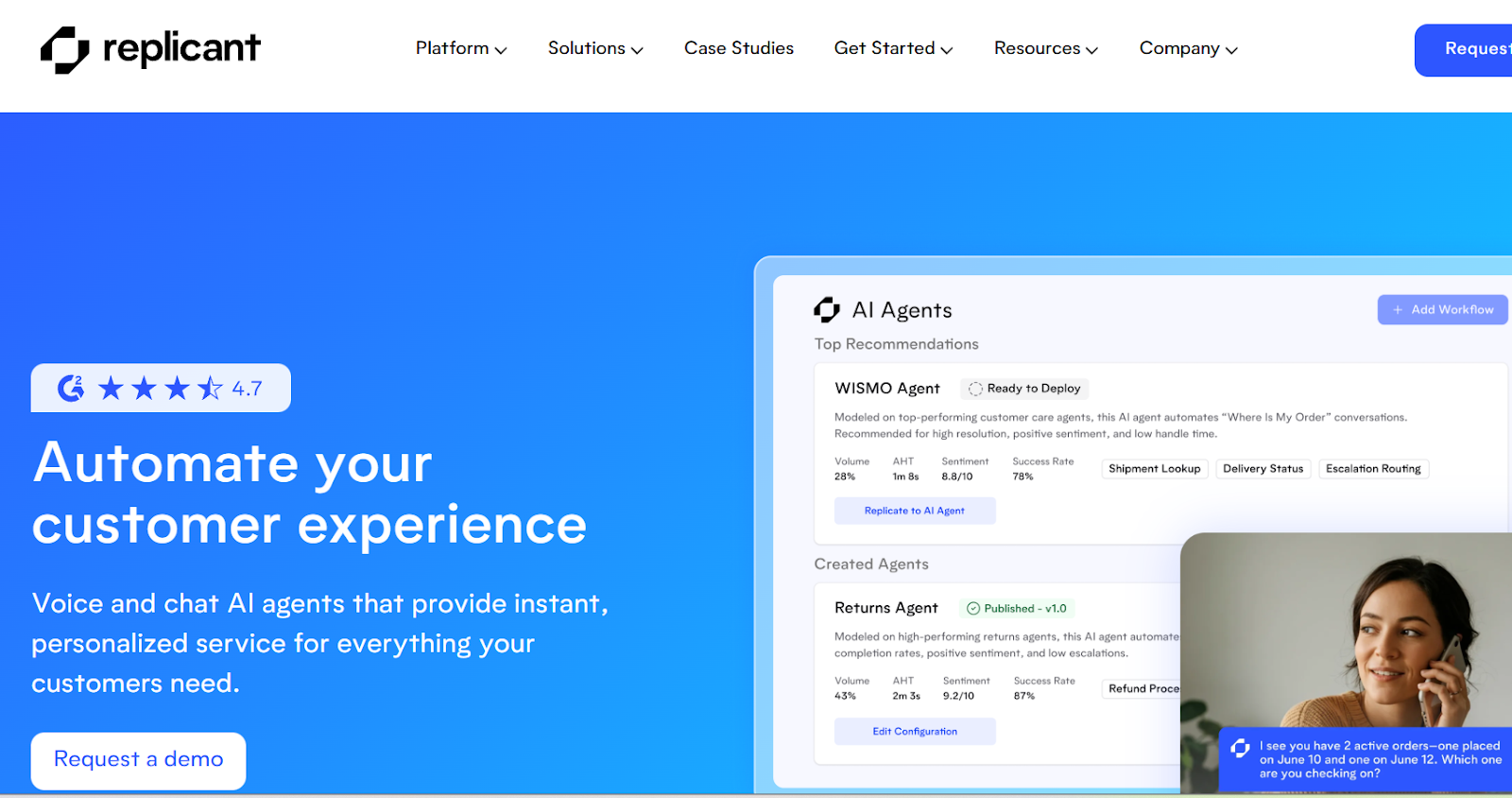
Replicant automates Tier 1 customer service with its Thinking Machine engine. It focuses on resolving support issues end-to-end at enterprise scale.
Benefits
Replicant is one of the top AI tools that handles voice, chat, and SMS with consistent logic. It integrates deeply with backend systems so agents can process common tasks without human help. Contact centers appreciate Replicant’s proven scalability and strong implementation support. Built-in analytics help teams track resolutions, trends, and quality improvements.
Pros
- Strong resolution-first automation
- Proven scalability for large contact centers
- Hands-on onboarding and support
- Works across multiple channels
Cons
- No transparent pricing
- Requires formal deployment cycles
- Less ideal for small teams testing AI
G2 Rating: 4.7/5 (45 reviews)
Review: “The ease of us in the portal, and the ability for our agents to chase down more leads with calls they aren't able to get to.”
7. ElevenLabs
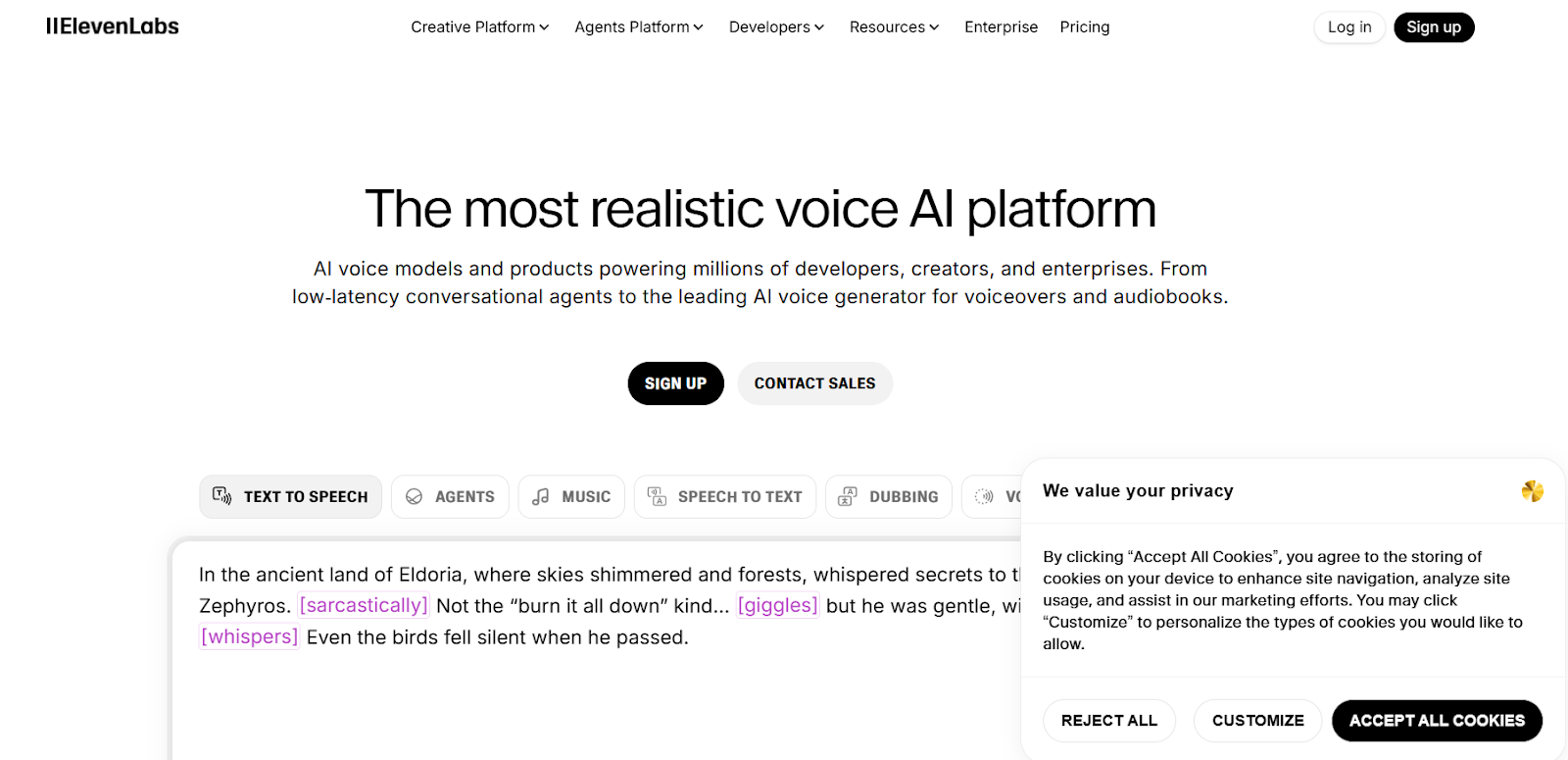
With ultra-realistic text-to-speech and advanced voice cloning, ElevenLabs is one of the top AI tools that many businesses rely on. It supports conversational agents that can read back reasonable, human-sounding, and expressive voice responses.
Benefits
ElevenLabs produces natural audio that captures tone, rhythm, and emotion with impressive accuracy. Brands can clone voices using small samples and create unique voice identities for apps and products. It supports multiple languages and can keep a voice’s personality even when translating or dubbing. Voice tuning controls help teams shape style, accent, and delivery.
Pros
- Best-in-class voice realism
- Strong cloning and tuning tools
- Broad language support
- Great for narration, media, and branding
Cons
- Not a complete telephony or agent platform
- Credit-based pricing can be hard to forecast
- Limited compliance features for regulated industries
G2 Rating: 4.5 (957 reviews)
Review: “The voice agent's remarkable smoothness and low latency make the experience delightful, often leading users to forget they are interacting with an AI rather than a human.”
Challenges to Consider When Deploying Voice Automation
Even the best voice automation tools need planning and steady optimization. Teams must understand common friction points before going live.
Key challenges include:
- Handling diverse speech patterns: Accents, background noise, and unclear phrasing can reduce accuracy.
- Ensuring smooth integrations: When you connect voice agents to CRMs, marketing tools, or internal databases can get complex. By making sure the process is planned correctly, you will avoid any gaps in data and workflow. Plus, automating the process with no-code data connectors enhances the integration and delivers better, more accurate data.
- Designing user-friendly conversation flows: Poor scripts lead to confusion. Clear prompts, fallback responses, and easy escalation options keep conversations smooth.
- Managing exceptions and edge cases: Not every scenario should be automated. Teams should set parameters as to when calls should be escalated to a human agent.
- Monitoring and updating regularly: Voice agents require new training data, performance reviews, and updates in an ongoing manner to be accurate and helpful.
Future of Voice Agents in Enterprise Automation
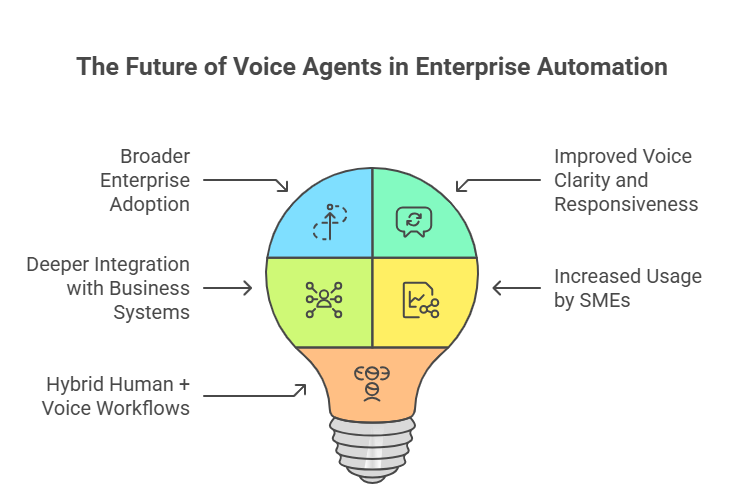
Voice automation is becoming a core part of business operations. It supports faster responses, consistent service, and reduced manual workload across sales, service, and operations.
In the coming years, voice agents will offer:
- More natural interactions with smoother speech handling.
- Deeper integrations with CRM, ERP, and marketing platforms.
- Improved multilingual support for global audiences.
- Stronger context awareness to avoid repetitive questions.
- Adaptive responses based on user intent and past behavior.
As these capabilities evolve, voice agents will move beyond simple call handling. They will complete tasks, understand customer needs faster, and help teams scale with confidence.
Take the Next Step Toward Automation Excellence with Corefactors
As automation becomes a key element of strategy, voice systems will transform the way businesses interact with customers. They assist organizations in building better customer relationships and simplifying day-to-day tasks. They also help teams stay ahead in a market that changes every day. Businesses that act early will enjoy an edge and make things easier for everyone.
That’s why a unified RevOps CRM like Corefactors matters so much. Corefactors brings sales, marketing, support, and customer success teams on the same platform. This includes integrated phone service, lead management, omnichannel communication, automation, and dashboards.
Get started with Corefactors today, your all-in-one platform for predictable and scalable revenue growth.
Heading 1
Heading 2
Heading 3
Heading 4
Heading 5
Heading 6
Lorem ipsum dolor sit amet, consectetur adipiscing elit, sed do eiusmod tempor incididunt ut labore et dolore magna aliqua. Ut enim ad minim veniam, quis nostrud exercitation ullamco laboris nisi ut aliquip ex ea commodo consequat. Duis aute irure dolor in reprehenderit in voluptate velit esse cillum dolore eu fugiat nulla pariatur.
Block quote
Ordered list
- Item 1
- Item 2
- Item 3
Unordered list
- Item A
- Item B
- Item C
Bold text
Emphasis
Superscript
Subscript
Frequently Asked Questions (FAQs)
How long does it take to deploy an AI voice agent for business use?


Deployment timelines vary by platform and use case. Simple call flows can go live in days, while complex integrations may take several weeks.
Can AI voice agents work alongside human support teams?
Yes. Most platforms support seamless handoffs to human agents when a request becomes too complex or sensitive.
Do voice agents require constant retraining after deployment?
They do not need constant retraining, but regular review and updates help improve accuracy as customer needs and products change.
Can AI voice agents be used for outbound calls and follow-ups?
Yes, many platforms support outbound use cases such as reminders, lead follow-ups, and customer surveys, not just inbound support.
What industries benefit most from voice agent automation?
Industries with high call volumes, such as retail, healthcare, finance, logistics, and SaaS, see the fastest ROI from voice automation.



.png)




.png)


.png)