

.png)
From WhatsApp Chaos to 40% More Conversions: Fortune MG's Growth Story with Corefactors
Karthik.A
A story of growing lead volumes, hidden delays, and a system that finally brought everything into sync.
Growth always looks good from the outside. More enquiries, more locations, and more customers walking in. But internally, it often brings complexity that slowly starts affecting how teams operate.
For Fortune Malayalam Automobiles Pvt Ltd - Fortune MG, this shift didn’t happen overnight. As their dealership network expanded across Kerala, lead volumes increased and so did the pressure on teams to respond faster and manage conversations better.
On the surface, things were still moving. But underneath, there were delays, missed follow-ups, and gaps in communication that were quietly impacting conversions.
They realized something important early. The problem was not the number of leads. It was how those leads were being managed across teams and systems.
About Fortune Malayalam Automobiles Pvt Ltd - Fortune MG
Fortune Malayalam Automobiles Pvt Ltd is one of Kerala’s leading MG dealerships, with a strong presence across multiple cities including Cochin, Kannur, Kollam, Muvattupuzha, Angamaly, Kottarakkara, Trivandrum, and Thiruvalla.
Operating at this scale means handling enquiries from different locations, channels, and customer types every single day. Each branch functions independently, but the customer expects a consistent experience no matter where they engage.
This creates a unique challenge. The brand experience needs to feel unified, even when operations are distributed. And that is only possible when systems are structured, visible, and fast.
.png)
Challenges Fortune MG Faced
As Fortune MG grew, their existing processes started showing limitations. These were not dramatic failures, but operational gaps that added up over time and affected overall efficiency.
1. Leads managed through spreadsheets 📊
The entire lead management process relied on Excel and Google Sheets. While this worked initially, it became difficult to maintain as volumes increased. Teams had to manually enter data, update statuses, and track follow-ups, which created delays and inconsistencies.
This led to several issues:
- Sheets were not always updated on time
- Different teams worked on different versions
- Important lead details were sometimes missed
- Time was spent managing data, not acting on it
Over time, the system became more of a burden than a support.
2. No structured visibility in lead handoffs ⏱️
One of the most critical steps in the process was the transition of leads from Customer Relationship Executives (CREs) to Relationship Managers (RMs). This handoff was happening manually, often through WhatsApp or internal coordination.
The lack of structure created blind spots:
- No way to track when a lead was assigned
- No visibility into how quickly RMs responded
- No accountability for delays
This made it difficult for managers to identify bottlenecks or improve response times.
3. WhatsApp communication without tracking 💬
WhatsApp played a central role in customer communication. However, it operated completely outside the system. Conversations were happening on personal devices and were not recorded centrally.
This resulted in:
- Loss of conversation history
- Lack of shared visibility across teams
- Difficulty in continuing conversations when ownership changed
When customers followed up later, teams often lacked the full context needed to respond effectively.
4. Inconsistent follow-up processes 🔁
Follow-ups were not guided by a system. They depended on individual effort and memory, which naturally led to inconsistencies.
Some leads received timely and multiple follow-ups, while others were contacted only once and then forgotten.
Without structured reminders or workflows:
- Leads were not nurtured properly
- Potential customers went cold
- Conversion opportunities were lost gradually
5. Limited visibility into performance 📉
Without a centralized platform, tracking performance metrics was difficult. Managers had limited access to real-time insights and had to rely on manual reporting.
This meant:
- Response times were not clearly measured
- Lead movement across stages was not visible
- Team performance was hard to evaluate
As a result, decision-making was slower and often based on incomplete information.
How Corefactors Transformed the Workflow
Corefactors addressed these challenges by bringing structure, automation, and visibility into the entire lead management process. Instead of fixing individual problems, it connected all parts of the workflow into a single system.
⚡ 1. Lead assignment became instant and rule-based
The first big change was removing manual routing.
Now:
- Leads are assigned automatically
- The right RM gets the lead immediately
- No delays, no confusion
This ensured no lead was missed and every enquiry entered a defined journey.

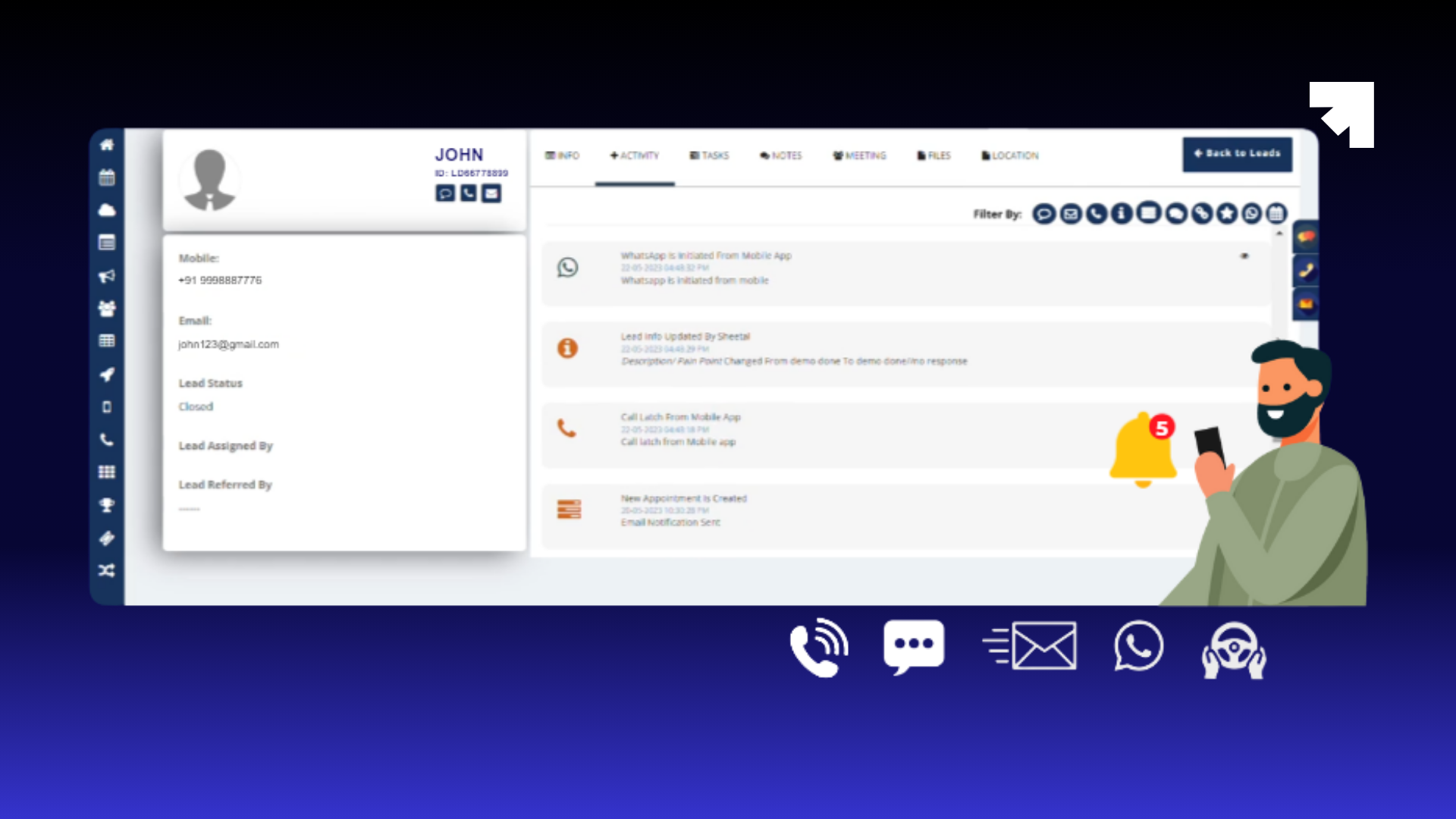
📲 2. Integrated WhatsApp communication
Corefactors brought WhatsApp directly into the CRM, making it a part of the system rather than an external tool.
This allowed:
- All customer conversations to be captured automatically
- RM responses to be recorded in real time
- Teams to access complete interaction history from one place
This significantly improved coordination and ensured that no communication was lost.
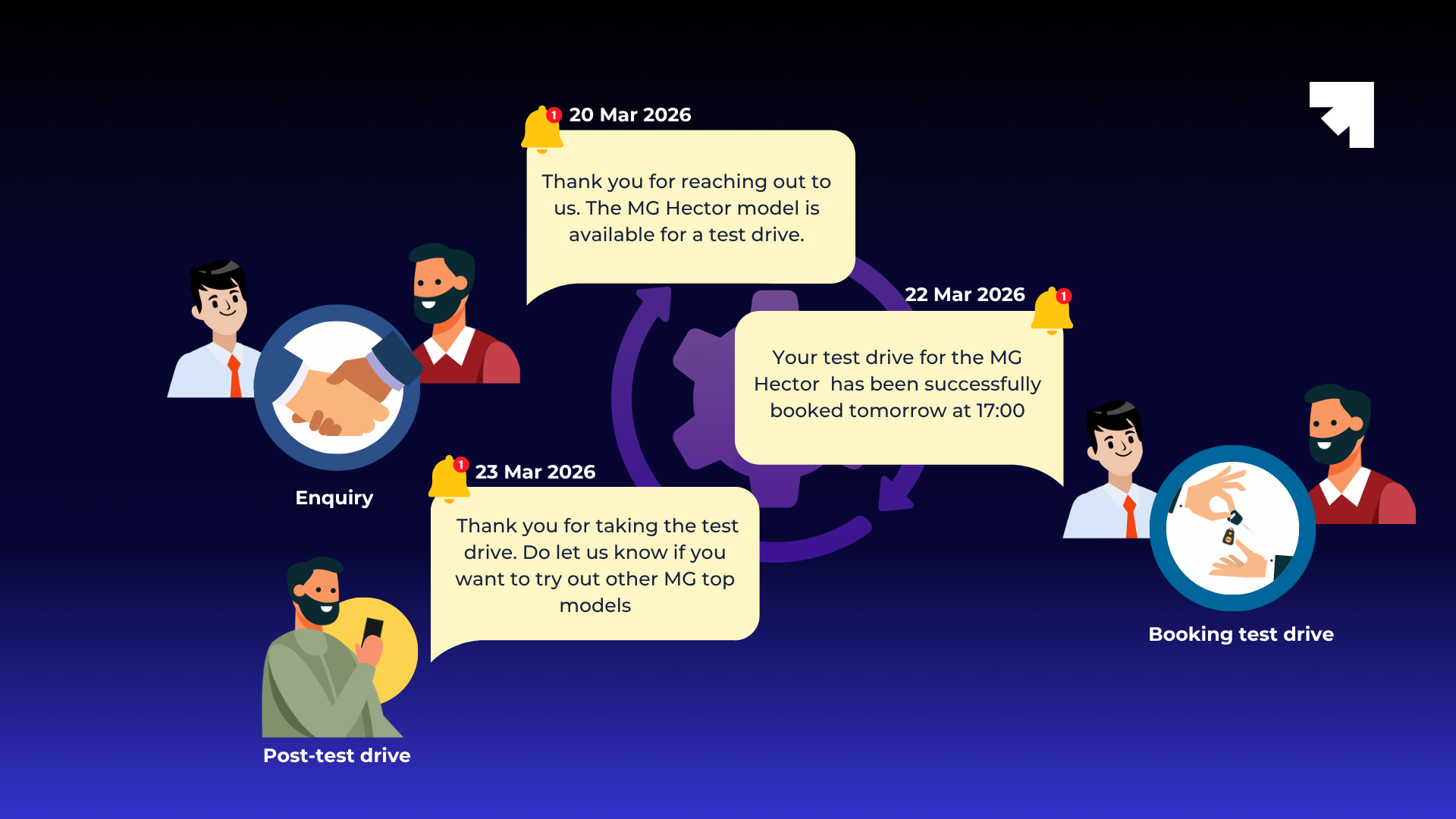
🔄 3. Structured lead journeys and follow-ups
With Corefactors, follow-ups became systematic rather than manual. Journey-based workflows were introduced to guide leads through predefined stages, with automated reminders and actions at each step.
This ensured that:
- Every lead received timely attention
- Follow-ups were consistent across teams
- No opportunity was missed due to oversight
📞 4. Call tracking for better accountability
Corefactors enabled tracking of both incoming and outgoing calls within the system. Every interaction was logged with details such as duration and outcomes.
This provided managers with clear visibility into team activity and helped improve performance through better coaching and monitoring.
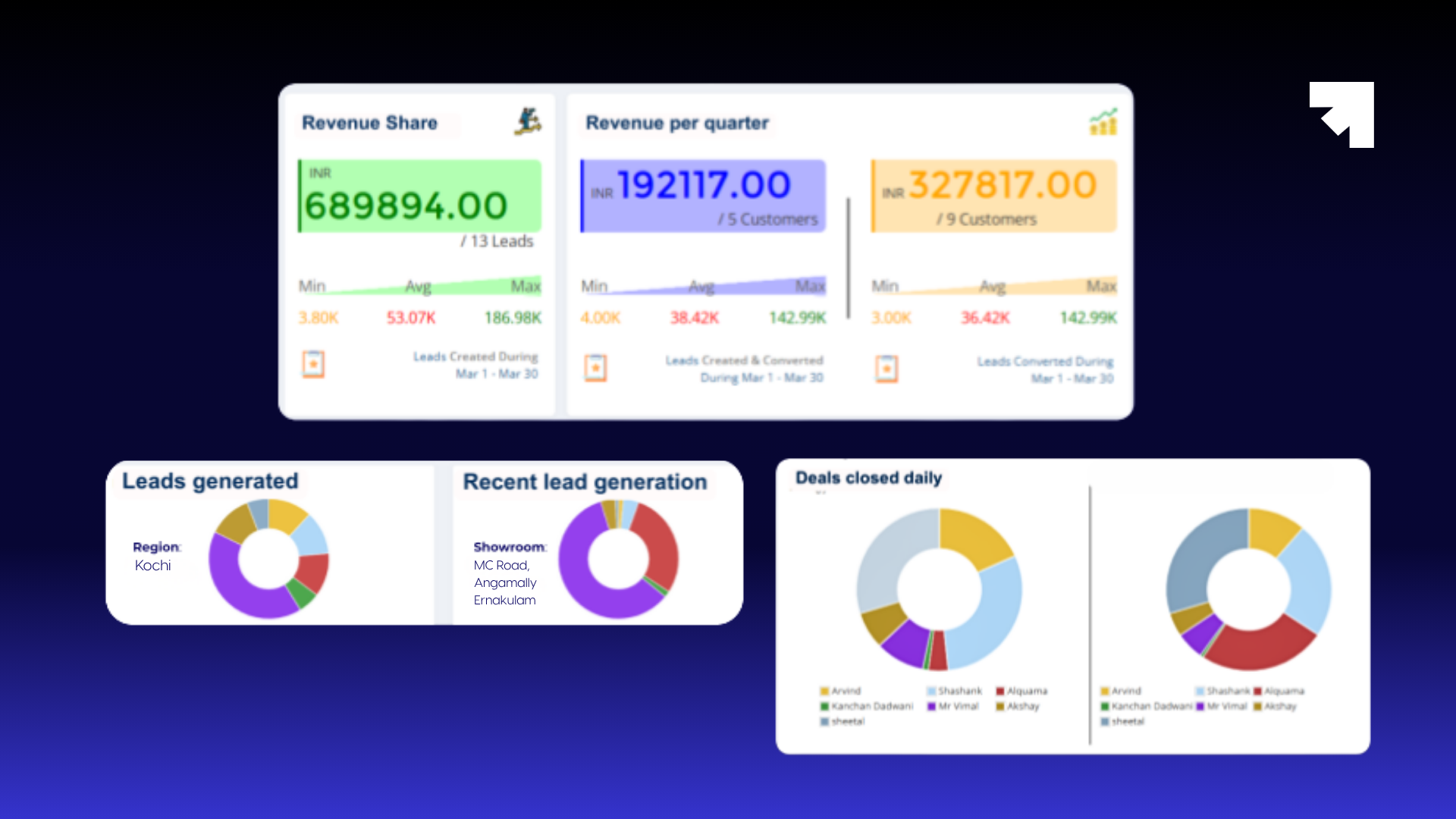
📊 5. Centralized dashboard and real-time visibility
All lead data, communication, and activities were brought into a single dashboard. This gave leadership a complete view of the sales pipeline across all locations.
Managers could now:
- Monitor lead status in real time
- Track response times and follow-ups
- Evaluate team performance and identify gaps
- Conversion progress
This level of visibility made decision-making faster and more effective.
🧠 6. Data-driven improvements
With structured data and real-time insights, Fortune MG was able to move from reactive problem-solving to proactive optimization.
They could identify patterns, improve weak areas, and continuously refine their sales process based on actual performance data.
📈 Results
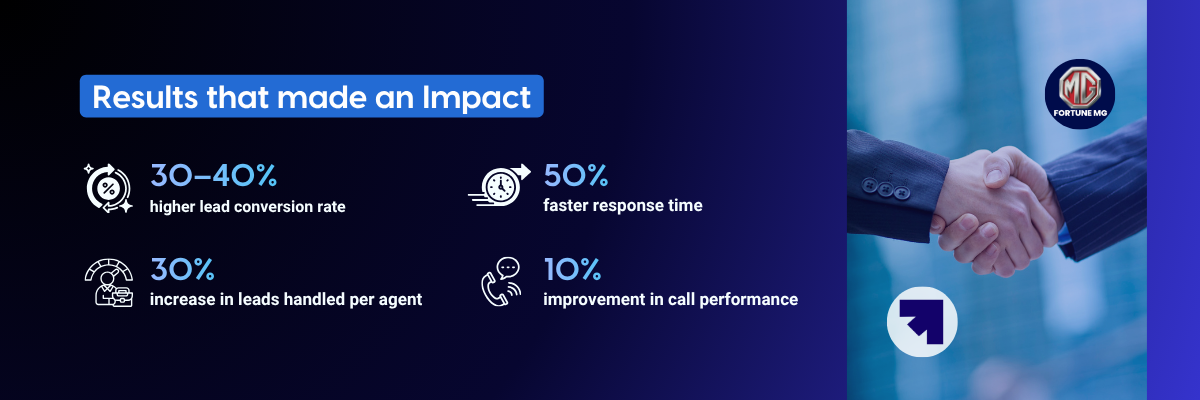
With Corefactors in place, Fortune MG saw measurable improvements across speed, efficiency, and conversions.
- 🚀 50% faster response time
Leads were contacted quickly, increasing engagement while interest was still high - 📊 30% increase in leads handled per agent
Automation reduced manual effort, allowing teams to focus on meaningful interactions - 📞 10% improvement in call performance
Better visibility and tracking improved the quality of conversations - 💰 30–40% higher lead conversion rate
Faster responses and consistent follow-ups translated into higher conversions
These improvements were seen across locations, creating a more scalable and efficient system.
🏆 The Bigger Shift
Beyond the numbers, the biggest change was how the teams operated.
The process moved from being dependent on individuals to being driven by a system. This reduced uncertainty, improved coordination, and created a more reliable workflow.
- Teams no longer worried about missing leads
- Managers had complete visibility without chasing updates
- Follow-ups became consistent and predictable
- Communication became transparent and trackable
This shift made it easier for Fortune MG to scale without increasing operational complexity.
Client’s Love 💙





.png)


.png)